

“This article is incredibly important because it teaches you exactly what ‘Magic Keywords’ are and how to discover them. Nowadays, when conducting keyword research, it is essential to uncover the specific type of search terms that every website desperately needs to rank.
If your website is brand new, here is an expert tip from my side: focus strictly on finding ultra-low competition keywords. You can easily use the free versions of SEMrush and Ahrefs to hunt down these low-difficulty gaps. Even if a keyword has a modest monthly search volume of around 1,000 impressions, targeting it will absolutely bring you guaranteed traffic and results. Give our specialized tool a try right now to start extracting these high-intent Magic Keywords instantly!”
Six months ago, a blogger in the personal finance niche came to me with a real problem.
She had published 40 articles. All properly written. Good structure. Internal linking done right. But almost zero organic traffic. She had spent months targeting keywords like “how to save money” and “best budgeting tips” — phrases with 50,000+ monthly searches and keyword difficulty scores above 80.
She was competing against NerdWallet, Investopedia, and Forbes. With a six-month-old domain.
We spent two hours using the A to Z method I am about to share. We found 34 keywords she had never considered — phrases like “how to save money on groceries as a single person,” “emergency fund calculator for irregular income,” and “budgeting template for commission-based workers.”
Combined monthly volume across all 34 keywords: roughly 8,400 searches. Combined keyword difficulty: average 14.
Eight weeks later, her site was getting 1,200 monthly organic visitors. Not from her big competitive keywords. From the magic ones nobody else was targeting.

What Makes a Keyword “Magic”?
The term magic sounds vague, so let me be specific about what it means in practice.
A magic keyword is not simply a low-volume keyword. Low volume without intent is just a dead end. A magic keyword sits at the intersection of four things:
Specific user intent. The person searching is not browsing. They know exactly what they need. “Budgeting template for commission-based workers” is specific. “Budgeting tips” is not.
Low topical competition. The top ten results for this keyword are forum posts, outdated articles from 2019, or thin content with no depth. You can genuinely outrank these with a focused, current article.
Semantic connectivity. The keyword connects naturally to your broader topic cluster. It is not an isolated phrase — it links to your pillar content and reinforces your topical authority in Google’s understanding of your site.
AI-friendly phrasing. The keyword is phrased as a real question or specific task. ChatGPT, Gemini, and Google AI Overviews pull answers from content that directly addresses these specific phrasings. A magic keyword written for GEO (Generative Engine Optimization) gets cited in AI answers, not just ranked in traditional search.
Why Most Keyword Research Misses These Keywords
Standard keyword tools have a presentation problem. They default to showing keywords sorted by search volume — highest first. This means everything you see at the top is already the most competitive. The genuinely accessible opportunities are buried on page six of a results list that most people never scroll to.
The other issue is the seed-and-search method. You enter one keyword, get a list, and pick from that list. The tool only shows variations it already knows to suggest. It does not show you the combinations that real users type — the ultra-specific phrases that come from actual problems, actual situations, actual questions.

The A to Z method breaks this pattern entirely.
The A to Z Method — How It Works
The idea is simple. Google’s autocomplete shows you what real people are actually typing — not what a keyword tool thinks is popular. When you start typing “how to save money a…” Google suggests completions based on real search frequency. “How to save money as a student.” “How to save money as a single person.” “How to save money at Amazon.”
Do this for every letter of the alphabet and you have 26 completely different suggestion sets, each revealing keyword variations you would never think to search for manually.
The WP Skillz Semantic Keyword Ideas Generator automates this. Enter your seed keyword, enable A-Z Semantic Expansion, and the tool queries Google’s autocomplete endpoint with your seed keyword plus every letter — running 26+ searches simultaneously and returning up to 100 keyword ideas in seconds.
What you get back is not a theoretical list. It is what real people are actually typing into Google right now.
Step-by-Step: Finding Your Magic Keywords
Step 1 — Choose a Specific Seed Keyword
Do not start with a single broad word. “Budgeting” is too vague — the tool will return other broad variations. Start with a phrase that already has some specificity: “budgeting for freelancers” or “budgeting app for couples.”
The more specific your seed, the more specific the magic keywords it surfaces.
Step 2 — Enable A-Z Expansion
In the Keyword Ideas Generator, check the A-Z Semantic Expansion checkbox. This runs your seed keyword combined with every letter through Google’s autocomplete. The results will include variations that the standard query alone would never surface.
Step 3 — Apply the Intent Filter
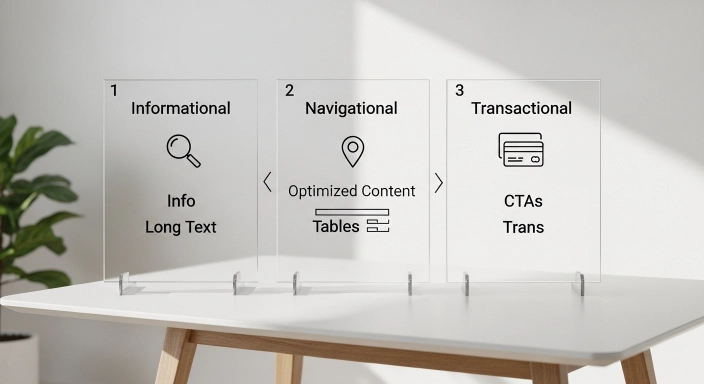
Use the intent filter to separate results by type:
- Informational — “how,” “what,” “why,” “guide” phrases. Target these with detailed blog posts.
- Commercial — “best,” “vs,” “review,” “compare” phrases. Target these with comparison articles.
- Transactional — “buy,” “download,” “price,” “free” phrases. Target these with product or landing pages.
Do not try to write one article that targets all intent types. Each intent type needs its own content format.
Step 4 — Check Keyword Difficulty Color Codes
The tool color-codes keyword difficulty: green (below 40), orange (40–70), red (above 70). As a new or mid-authority site, focus almost entirely on green. A keyword with 300 monthly searches and KD 12 will drive traffic within weeks. A keyword with 5,000 searches and KD 78 may never rank regardless of content quality.
Step 5 — Open the Detail Modal for Semantic Keywords
Click the magnifying glass icon on any keyword you are considering. The detail view shows:
- The LSI (Latent Semantic Indexing) keyword variation to incorporate naturally into your content
- Recommended word count based on keyword difficulty
- SEO strategy advice: whether on-page optimization alone is sufficient or whether you need external link signals
This information shapes your content plan before you write a single word.
Step 6 — Export Your List
Click CSV or PDF export to download your full keyword list. The CSV works directly in Google Sheets or Excel for content calendar planning. The PDF is shareable with team members or clients.
Semantic Clustering — Turning Keywords Into Topical Authority
Finding magic keywords individually is useful. Grouping them into semantic clusters is what actually builds the topical authority that moves rankings.
Google’s algorithm does not rank individual pages in isolation. It evaluates how thoroughly a site covers a topic area. A site with ten interconnected articles about freelance budgeting signals deeper expertise than a site with one article about general budgeting tips — even if the single article is longer and better written.
Here is how to build a cluster from your magic keyword list:
Identify your pillar keyword. This is your highest-volume, most comprehensive target — the one that requires the longest, most detailed content. Example: “complete guide to budgeting for freelancers.”
Group related magic keywords around it. From your A-Z export, pull keywords that are clearly sub-topics of the pillar: “budgeting for freelancers with irregular income,” “freelance tax budgeting tips,” “quarterly tax calculator for freelancers.”
Create one focused article per sub-topic keyword. Each article covers its specific magic keyword in depth — not broadly, not trying to also cover the pillar topic.
Link everything back to the pillar. Every sub-topic article links to the pillar page using the pillar’s primary keyword as anchor text. The pillar page links back to relevant sub-topics.
This interconnected structure is what Google’s algorithm recognizes as genuine topical authority. It is also the most reliable path to ranking competitive pillar keywords — your sub-topic pages build collective authority that lifts the pillar’s ranking over time.
Intent Matching — The Detail Most Writers Skip
The single most common reason good content does not rank is intent mismatch. The article answers the question correctly but in the wrong format for what searchers actually want.
Before writing any article targeting a magic keyword, search that keyword in Google. Look at the top three results. What format are they?
- If they are listicles (“10 ways to…”), write a listicle
- If they are step-by-step guides, write a guide
- If they are comparison tables, write a comparison
- If they are tools or calculators, build a resource
Google has already shown you what format users prefer for this query. Disagreeing with that preference — writing a 3,000-word essay when the top results are quick listicles — will hurt your CTR even if you rank. Users click what matches their expectations.
Technical Factors That Determine Whether Keywords Stick
Magic keywords rank faster than competitive ones — but only if your site’s technical foundation is solid. A perfect article on a slow site will not outrank a mediocre article on a fast one for long.
Two checks before every publish:
Page speed. Use the WP Skillz Website Speed Test on your article URL after publishing. If mobile performance is below 75, the technical penalty may offset the keyword advantage. Common fixes: image compression through the Bulk Image Resizer, removing unused plugin scripts, enabling caching.
Schema markup. Magic keywords frequently trigger “People Also Ask” boxes and FAQ rich results in Google. Adding FAQ schema to your article’s Q&A section makes it eligible for these placements — which increase your SERP real estate without changing your ranking position. Generate the schema in seconds using the WP Skillz Schema Markup Generator.
Magic Keywords vs High Volume Keywords — Direct Comparison
| Metric | Magic Keyword | High Volume Keyword |
|---|---|---|
| Monthly volume | 50–500 | 5,000–50,000+ |
| Keyword difficulty | 5–30 | 60–95 |
| Time to rank | 4–12 weeks | 12–24+ months |
| Competition | Forum posts, old articles | Major publications |
| AI Overview eligibility | High — specific phrasing | Low — dominated by big brands |
| New site viability | Yes | Rarely |
Magic Keyword Checklist
Before publishing any article targeting a magic keyword:
Keyword validation:
- KD below 40 (green in the tool)
- Intent confirmed by manual Google search
- Content format matches top-ranking format
- Part of an existing topic cluster
Content optimization:
- Primary keyword in H1, first 100 words, and one H2
- LSI keyword from the detail modal used naturally (2–3 times)
- FAQ section included and ready for schema markup
- Word count meets tool recommendation for this KD level
Technical checks:
- Mobile PageSpeed above 75
- FAQ schema generated and added to page
- Internal link to pillar page included
- Internal link to one related sub-topic included
Frequently Asked Questions
How do I know if a keyword is magic or just low volume with no traffic? Check the intent. A keyword with 30 monthly searches from people who know exactly what they need — a specific tool, a specific fix, a specific situation — is magic. A keyword with 30 searches from people vaguely curious about a topic is just low volume. The A-Z method surfaces intent-heavy queries naturally because specific user needs produce specific autocomplete suggestions.
Can I rank for magic keywords without backlinks? Usually yes for green KD keywords. When the top-ranking pages are forum threads and thin articles from 2018, a well-structured, current article with proper schema markup and internal linking can rank without external backlinks. This is the primary advantage of magic keywords for new and mid-authority sites.
How many magic keywords should I target per article? One primary magic keyword per article. Use the LSI variation from the detail modal throughout the content. If the tool shows closely related keywords — variations with the same user intent — you can target 2–3 per article, but do not try to cover different intent types in one piece.
Is the WP Skillz Keyword Ideas Generator really free? Yes — no login, no credit card, no daily limit on searches. The A-Z expansion, intent filter, CSV/PDF export, and detail modal are all free.
Conclusion — The Magic Is in the Specificity
The blogger from my opening story was not failing because of bad writing or poor SEO technique. She was failing because she was targeting keywords that her six-month-old domain had no realistic chance of ranking for.
Switching to magic keywords did not require better content. It required better targeting. The content she was already capable of writing was more than good enough — it just needed to be pointed at questions where her answers could actually surface.
Start with your seed keyword. Enable A-Z expansion. Filter by intent. Build your cluster. The magic keywords your competitors are ignoring are already in that list, waiting for someone to write the article that answers them properly.
Connect with me on LinkedIn if you want to discuss a specific niche’s keyword strategy.
Waseem Aijaz — WordPress Developer & SEO Specialist, WP Skillz Keyword Ideas Generator | SEO Tools | About WP Skillz