


Best Keyword Research Tool for Blog: Start to Finish SEO Guide (2026)
Did you know that over 90% of blog posts get absolutely zero organic traffic from Google? All that hard work, research, and writing… for nothing.
As a Full-Stack WordPress Specialist and SEO Expert who has optimized over 400 projects, I see bloggers make the same mistake every day: they write what they want to write rather than what their audience is actually searching for. To fix this, you need the best keyword research tool for blog success.
Keyword research isn’t just about finding high-volume words anymore. In the era of AI Overviews (AIO) and Generative Engine Optimization (GEO), it’s about understanding Search Intent and building Topical Authority.
In this complete, start-to-finish guide, I will show you how to find low-competition, high-converting keywords, map them semantically, and outrank the big players—without spending $100 a month on expensive software.
Step 1: Brainstorming “Seed Keywords” (The Smart Way)
Keyword research always starts with your own brain. A “seed keyword” is the foundation of your research. If your blog is about coffee, your seed keywords might be “French press,” “espresso beans,” or “coffee grinder.”
However, traditional brainstorming isn’t enough. To find what real humans are struggling with, you need to study your niche where they hang out:

- Reddit & Quora: Search for your seed keyword on Reddit. Look for questions with high upvotes. If people are asking, “What is the best water-to-coffee ratio for an Aeropress?” that is a gold mine of a long-tail keyword.
- Competitor Content Gaps: Look at what your competitors are writing about, and more importantly, look at what they missed.
Step 2: Understanding Keyword Types and Search Intent
Before you put your seed keywords into the best keyword research tool for blog planning, you must understand why the user is searching. Google’s algorithm strictly prioritizes Search Intent. If you get this wrong, you will never rank.
- Informational Intent: The user wants to learn. (e.g., “how to clean a coffee maker”). Action: Write a detailed “How-To” blog post.
- Commercial Intent: The user is researching before making a purchase. (e.g., “best coffee machine under $100”). Action: Write a comparison review or a listicle.
- Transactional Intent: The user is ready to buy right now. (e.g., “buy Nespresso pods online”). Action: Create a product or service page.
Expert Tip: Always Google your target keyword before writing. If the first page is full of YouTube videos and Pinterest images, writing a 2,000-word text article won’t help. Match the format Google is already rewarding.
Step 3: Crucial SEO Metrics to Analyze
When you generate a list of keywords, you will see thousands of options. How do you pick the right one? You need to look at specific metrics. According to extensive search-traffic studies by industry leaders, ranking #1 doesn’t always translate into the most traffic.
Here is what you must analyze:
- Search Volume: The average monthly searches. But beware: a keyword with 10,000 volume might be dominated by Wikipedia, while a “Zero Volume” long-tail keyword might bring you 50 highly targeted, ready-to-buy visitors a month.
- Keyword Difficulty (KD): This estimates how hard it is to rank in the top 10 based on competitor backlinks. As a new blog, target keywords with a KD of under 20.
- Traffic Potential: A single page can rank for hundreds of related terms. Don’t just look at the volume for a single keyword; look at the total traffic the #1 page is receiving.
- Cost Per Click (CPC): A high CPC indicates advertisers are paying a premium for this keyword because it converts well. High-CPC keywords are highly lucrative for Google AdSense publishers.

Step 4: Semantic Clustering (The 2026 Secret to Ranking)
This is where 99% of bloggers fail. They practice outdated “keyword stuffing”—repeating the same phrase 20 times. According to Google’s official Search Quality Evaluator Guidelines, your content must be naturally helpful and demonstrate EEAT (Experience, Expertise, Authoritativeness, Trustworthiness).
Instead of stuffing, you must use Keyword Clustering (Semantic SEO). If your main keyword is “organic gardening,” your cluster must include terms like “compost,” “pest control,” “soil pH,” and “heirloom seeds.”
How to do this for FREE:
Instead of paying for complex tools, use our Free Semantic Keyword Ideas Generator. It features an A-to-Z Deep Crawl that pulls autocomplete data from Google and Bing simultaneously, instantly building a topical map for your blog post.
WP Skillz vs. Competitors: Finding the Best Keyword Research Tool for Blog Content
Many gurus will tell you to use Google Keyword Planner (which hides exact volumes unless you pay for ads) or expensive $99/month SEO suites. Let’s look at why WP Skillz is the smarter choice for bloggers:
| Feature | WP Skillz Keyword Generator | Google Keyword Planner | Paid SEO Tools (Ahrefs/Semrush) |
| Price | 100% Free | Free (but exact data is hidden) | $99 – $199 / month |
| Semantic Data (AIO Ready) | High Accuracy | Low | High |
| A to Z Deep Search | Yes | No | Limited |
| Login Required | No | Yes | Yes |
| Export to PDF/CSV | Unlimited | Complex | Yes |
If you want the data of the big tools without the massive price tag, the WP Skillz tool is your ultimate ranking engine.
Step 5: How to Optimize Your Blog Post (On-Page Checklist)
Now that you have your semantic cluster, it’s time to write. Follow this exact structure to guarantee your SEO is perfectly optimized:
- H1 Title: Your primary keyword (best keyword research tool for blog) must be in your main title. Keep it catchy.
- H2 and H3 Headings: Use secondary keywords here (e.g., “Understanding Keyword Metrics” or “Free Keyword Planner Alternatives”).
- URL Slug: Keep it short and clean:
yourdomain.com/best-keyword-research-tool-blog. - First 100 Words: Answer the user’s intent immediately. Don’t write long, fluffy introductions.
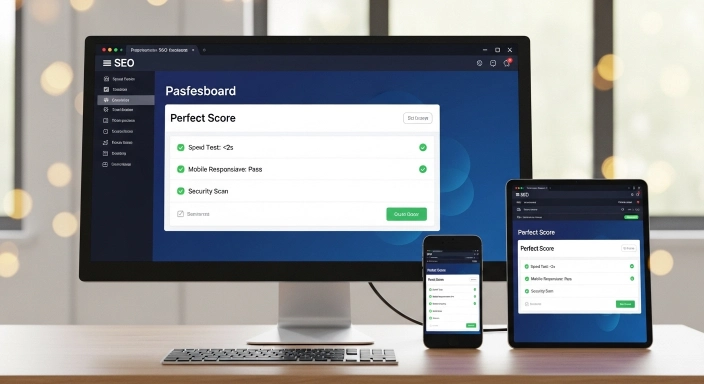
- Technical Health (Crucial): Keywords are useless if your website is broken. Before you publish, ensure you pass these two tests:
- Speed Test: Google penalizes slow sites. Use our PageSpeed Insights Alternative Tool to ensure your blog loads in under 2 seconds.
- Mobile Responsiveness: Over 60% of searches are on mobile. Test your layout with our Free Website Responsive Checker.
- Security: Ensure your site is protected against malware that can harm your rankings. Run a quick check with our Website Virus Scanner.
The Bottom Line
Doing keyword research doesn’t have to be a complicated, expensive nightmare. By brainstorming seed keywords, understanding user intent, and clustering semantic terms, you build a topical authority that Google cannot ignore.
You don’t need to break the bank to get started. Stop guessing what your audience wants and let real-time data drive your strategy.
Ready to find your next viral topic? Head over to our Free Semantic Keyword Ideas Generator, type in your niche, and download your free PDF report today!
Frequently Asked Questions (FAQs)
Q1: What is the best keyword research tool for blog beginners?
For beginners, the WP Skillz Free Semantic Keyword Generator is ideal because it requires no login, is 100% free, and provides an A-Z deep search to find low-competition keywords instantly.
Q2: Should I target keywords with zero search volume?
Yes! Zero-volume keywords are often highly specific “long-tail” queries. They have zero competition and usually convert extremely well because the user’s intent is very clear.
Q3: How many times should I use my keyword in a blog post?
Forget keyword density percentages. Place your primary keyword in the Title, URL, Meta Description, first paragraph, and one H2 heading. For the rest of the post, use semantic variations naturally.
Q4: Can I rank a new blog in 2026?
Absolutely. While high-authority sites dominate broad terms, new blogs can easily rank by targeting highly specific, low-competition long-tail keywords and answering the user’s query better than anyone else.